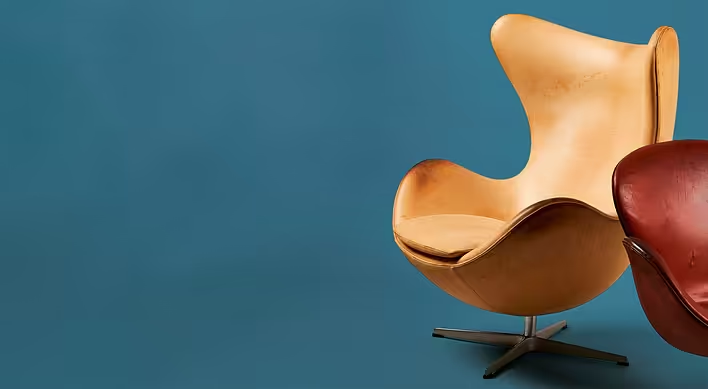
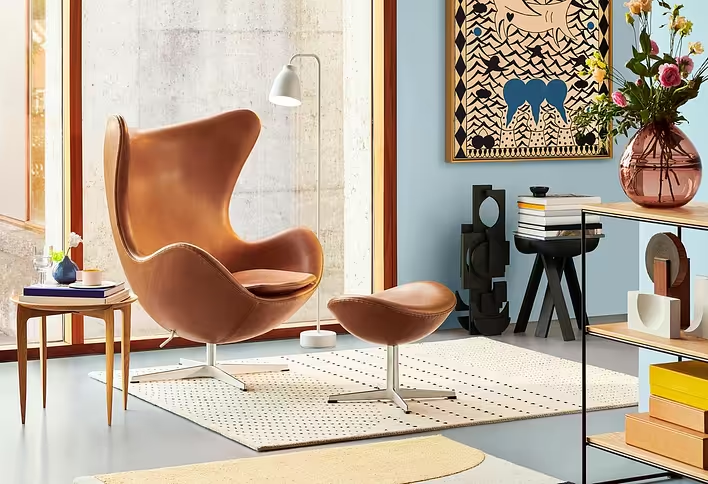
In the world of design, few objects have such a recognizable shape as the Egg Chair. Created in 1958 by the renowned Danish architect Arne Jacobsen, it became not just furniture, but a true manifesto of organic modernism. This chair is a perfect example of how architectural approach and artistic intuition can create something timeless.
Garage Laboratory and the Search for Form
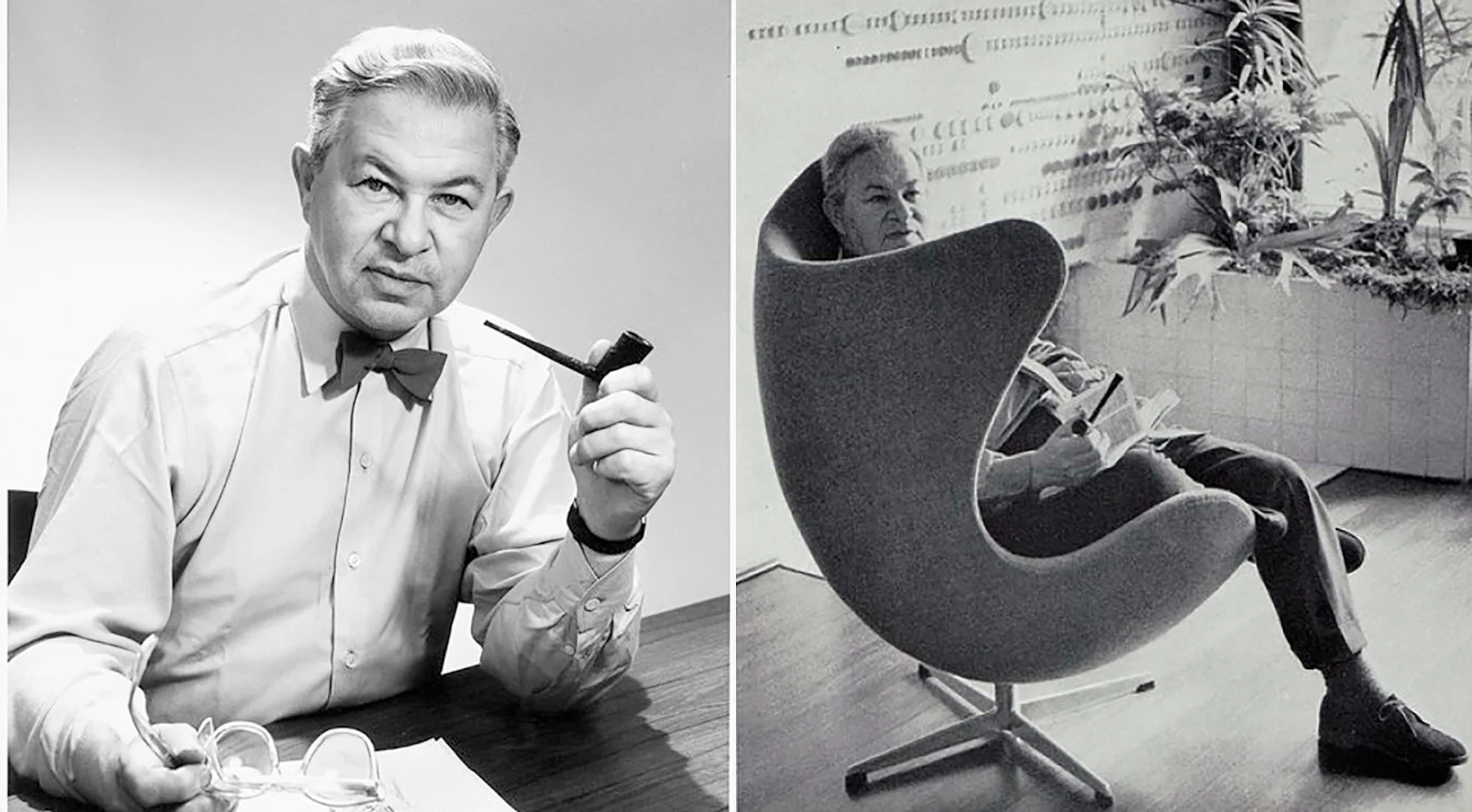
The path to creating the Egg Chair was not easy. Arne Jacobsen, who was a perfectionist by nature, did not trust paper drawings as much as he trusted his own hands. In his garage in Klampenborg, he set up a true sculptural workshop. For many weeks, the architect molded full-size clay models by hand, trying to find that perfect curve that would look harmonious from any angle.
Арне Якобсен
This process was a true challenge for the technology of the time. Traditional furniture-making methods involved the use of wooden frames, but they did not allow for such fluid, seamless shapes. Jacobsen was one of the first to use a radically new material — rigid polyurethane foam reinforced with fiberglass. This allowed for the creation of a solid "shell" that combined incredible strength and lightness, enabling the realization of the boldest curves.
SAS Royal Hotel: Total Design
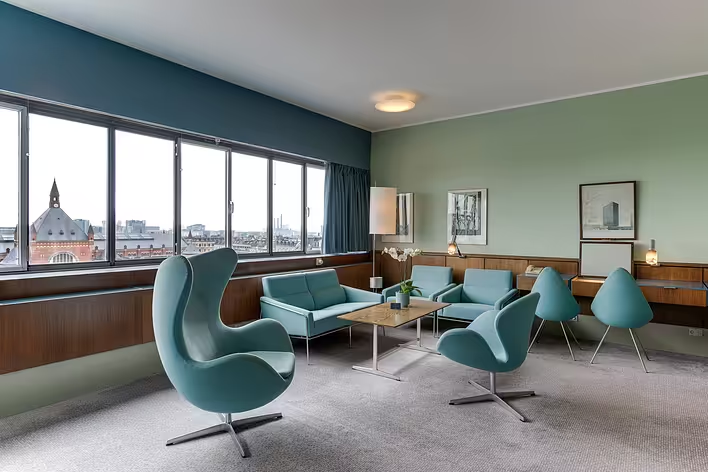
The Egg Chair was not just a separate piece of furniture, but part of a grand project — the SAS Royal hotel in Copenhagen. It was the world's first "designer hotel," where Jacobsen acted as a demiurge. He designed the building from the ground up, including interiors, lighting, textiles, and even the shape of the cutlery in the restaurant.
Готель Radisson Collection Royal, номер 606 зберігся з його оригінальним інтер'єром
The hotel itself was an embodiment of the international style: a skyscraper of glass and steel with a rigid grid of facades. Jacobsen understood that a person in such a rational environment needed an emotional counterbalance. The Egg Chair was meant to be that "organic object" that brings softness and comfort into the strict architectural context. Its sculptural form contrasted with the verticals of the building, creating a balance between technological progress and human nature.
Privacy in Public Space
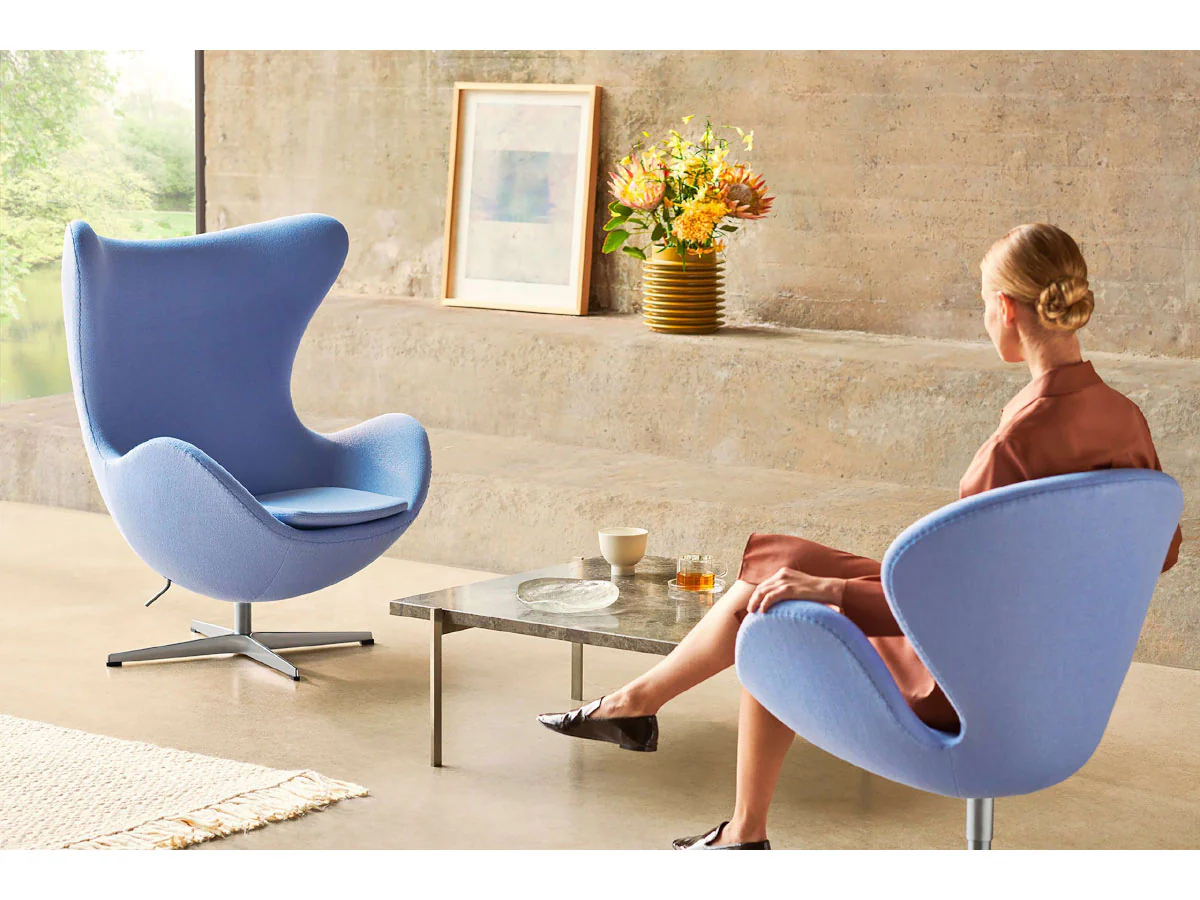
The main task of the chair was to provide privacy in the large, open, and noisy public space of the hotel lobby. Jacobsen reimagined the classic armchair (wingback chair), making it a modern "egg." This shape offered a unique psychological experience:
Acoustic Isolation: With its high curved back and side panels, the chair creates a sound barrier, muffling the din of the crowd. It is the perfect place for focused reading or a confidential conversation.
Visual Security: The cocoon shape allows a person to feel protected from behind and on the sides. Even in the center of a crowded hall, you find yourself in your own microcosm.
Ergonomics: Jacobsen added a tilt mechanism to the design, which adjusts to the weight of the specific user. This allows one not just to sit, but to be in a semi-reclined position, which is ideal for relaxation.
The Art of Upholstery: Why Is It So Difficult?
The production of the Egg Chair is a test of skill for any furniture maker. The company Fritz Hansen, which is the exclusive manufacturer of the original, preserves the traditions of handcraft.
The most challenging stage is applying the upholstery to the frame. Since the shape of the chair has a double curvature, the fabric or leather must be stretched perfectly, without a single wrinkle. The craftsman performs over 1100 stitches by hand, using a unique wavy stitch that has become the hallmark of the product.
To upholster one leather chair, two whole hides of the highest quality cattle are required. The process is so complex that even experienced craftsmen spend many hours completing a single piece. That is why the original Egg Chair cannot be cheap — it is a product of high craftsmanship culture.
How to Distinguish the Original from a Copy
Due to the incredible popularity of the Egg Chair, it has become one of the most copied pieces of furniture in the world. Here are the key signs of the original product from Fritz Hansen:
Absence of seams on the front: In the original, there are no visible seams or material joints on the front of the backrest and seat. The fabric should lie like a "second skin."
Quality of the seam: If you look at the edges of the chair, you will see a neat hand-stitched "zigzag" seam. In copies, the seams are often rough, uneven, or machine-made.
Base: The original leg is always four-pronged (in the shape of a cross), made of high-quality cast aluminum without casting defects.
Marking: Under the seat of the original, there is always a metal label or plastic sticker with the Republic of Fritz Hansen logo and a unique serial number.
Tilt Mechanism: The tilt adjustment handle in the original is metal and elegant; it operates smoothly without any foreign sounds.
Arne Jacobsen created an object that is not subject to changing fashion trends. The Egg Chair continues to appear in Hollywood films, top design projects, and private collections. It remains a symbol of the era when humanity began to seek harmony between futuristic technologies and basic comfort. It is more than just a chair — it is a sculpture that provides peace in a turbulent world.