This content has been automatically translated from Ukrainian.
Leidenfrost Effect is a physical phenomenon where a liquid, upon coming into contact with a very hot surface, does not evaporate instantly but begins to "slide" on it as if on a cushion of air. It is most commonly observed in the kitchen: a droplet of water on a hot frying pan forms a ball and moves quickly instead of disappearing immediately.
How the Leidenfrost Effect Works
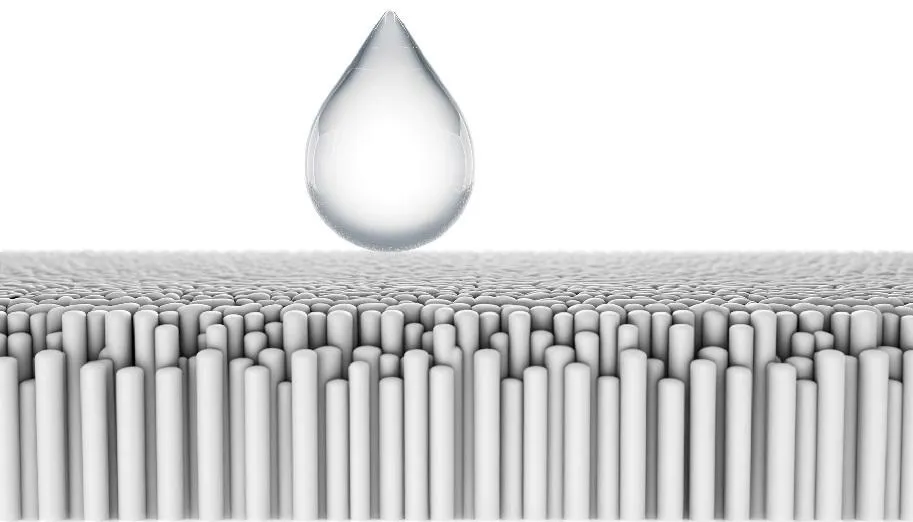
When the surface temperature significantly exceeds the boiling point of the liquid (for water, above 100 °C, but usually the effect manifests at ~180–200 °C and higher), the lower layer of the liquid instantly turns into vapor. This vapor creates a thin insulating layer between the surface and the liquid.
It is this layer that "lifts" the droplet, preventing it from contacting the hot surface. As a result:
- heat is transferred much more slowly,
- the liquid evaporates longer,
- the droplet can move and even "dance".
T_{surface} > T_{Leidenfrost}
Here:
- (T_{surface}) — surface temperature,
- (T_{Leidenfrost}) — critical temperature at which the vapor cushion forms.
Visual Example
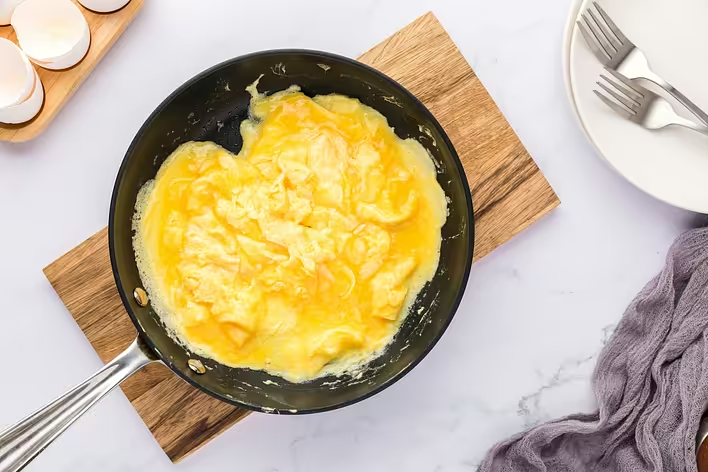
If you sprinkle a little water on a hot frying pan:
- at insufficient temperature, the water simply sizzles and evaporates quickly,
- at very high temperature — the droplet rolls and moves across the surface.
This is the Leidenfrost effect.
History of Discovery
The phenomenon is named after the German physician and scientist Johann Gottlob Leidenfrost, who first systematically described it in the 18th century. In 1756, he published a work in which he noted the unusual behavior of liquid droplets on highly heated surfaces. He explained that at sufficiently high temperatures, a layer of vapor forms between the liquid and the surface, which sharply reduces heat transfer and alters the evaporation process. Over time, this phenomenon was named after him — the Leidenfrost effect.
The Leidenfrost effect has not only domestic significance but is also actively used or taken into account in various fields:
- Culinary
In everyday life, this effect is often used as a simple way to check the temperature of a frying pan. If a droplet of water does not evaporate immediately but forms a ball and "slides" across the surface, it means that the surface is sufficiently heated for frying. This guideline helps to better fry foods and reduces the risk of sticking.
- Industry
In metallurgy and manufacturing processes, the effect influences the cooling of heated materials. The vapor film can slow down uniform heat dissipation, so this phenomenon is important to consider during the hardening of metals and controlling their properties.
- Engineering and Safety
In technical systems where high temperatures or cryogenic liquids are involved, the Leidenfrost effect can significantly impact the efficiency of heat exchange. It is taken into account during the design of cooling systems, thermal installations, and equipment for working with extreme temperatures.
- Science
In physics and thermodynamics, the Leidenfrost effect is an important subject of research. It is used to study heat transfer processes, phase transitions, and the behavior of liquids at very high temperatures. This helps to better understand the mechanisms of evaporation and the interaction of liquids with heated surfaces.