Have you ever wondered how our ancestors navigated the vast expanses of the Earth without GPS navigators? The answer lies in simple yet brilliant concepts such as geographical latitude. Let's explore what geographical latitude is and why it is so important to us today.
What is geographical latitude?
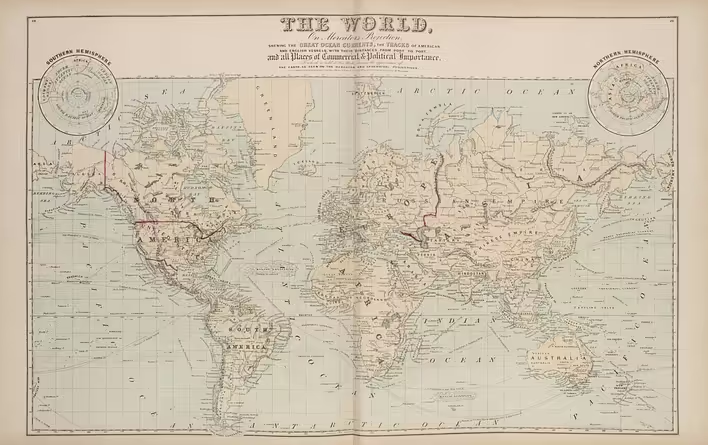
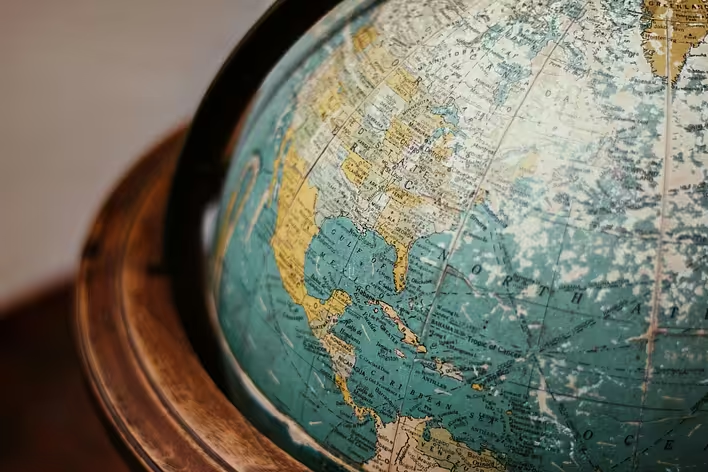
Geographical latitude is one of the two main coordinates that help determine the location of an object on Earth. If you have ever seen a globe or a map with a grid of lines, you may have noticed the horizontal lines — these are the lines of latitude. They help to understand how far north or south a point is from the equator.
How is geographical latitude measured?
Latitude is measured using angles. It is measured in degrees (°), minutes (‘), and seconds (“). The geographical latitude of the equator is 0°, and points located on the equator have this latitude. From the equator to the poles, geographical latitude changes from 0° to 90°. This means that geographical latitude can range from 0° to 90° north or south.
Geographical latitude can vary
Geographical latitude can be northern or southern depending on the direction from the equator. For example:
- Northern latitude: from 0° to 90° N (for example, Kyiv is approximately 50° N)
- Southern latitude: from 0° to 90° S (for example, Buenos Aires is approximately 34° S)
How does geographical latitude change?
Changes in geographical latitude can be observed during travels from north to south or vice versa. The closer you are to the poles, the greater your geographical latitude. Interestingly, geographical latitude has the highest value at the poles — it is 90°.
In what units is latitude measured?
As mentioned, geographical latitude is measured in degrees, minutes, and seconds. One degree consists of 60 minutes, and one minute consists of 60 seconds. Such detailed measurement allows for precise determination of the location of any point on the planet.
Why is geographical latitude important?
Geographical latitude plays an important role in our lives:
- Climate: Latitude affects the climatic conditions of a region. For example, the closer to the equator, the warmer it is.
- Navigation: It is the basis for maritime and aviation navigation.
- Astronomy: Latitude is used to determine the position of celestial bodies.
So now you know what geographical latitude is and why it is so important to us. It is not just numbers on a map; it is the key to understanding our world and its complexity. The next time you plan a trip or simply look at a globe, remember this simple yet brilliant invention of humanity. It helps us understand our place in the world and makes it a little smaller and more accessible for each of us.