What is urbanization: simple words for everyone

Table of contentsClick link to navigate to the desired location
This content has been automatically translated from Ukrainian.

Have you ever wondered why cities grow like mushrooms after rain? Well, today we will talk about urbanization — a process that is changing our world. You will learn what urbanization is in simple terms, as well as about the phenomenon known as false urbanization. Ready? Let's go!

What is urbanization?

Urbanization is the process of city growth and the increase of urban population. In simple terms, it is when people move from villages to cities in search of better opportunities. It is a natural process that accompanies the development of society. People seek jobs, education, medical services, and other advantages that urban life offers.

Why does urbanization occur?

  1. Economic opportunities: Cities usually offer more jobs and better salaries.
  2. Education and healthcare: Large cities have universities, schools, and hospitals.
  3. Social connections: In cities, it is easier to find like-minded people and develop social ties.

Urbanization in simple terms

Imagine a picture: you live in a small village where everyone knows each other. But there are few opportunities for development — there are no jobs, schools are far away, and there is only one hospital for the entire area. Then you hear about a big city nearby that has all this and even more. So, you decide to move there in search of a better life. That is urbanization in simple terms.

False urbanization: what is it?

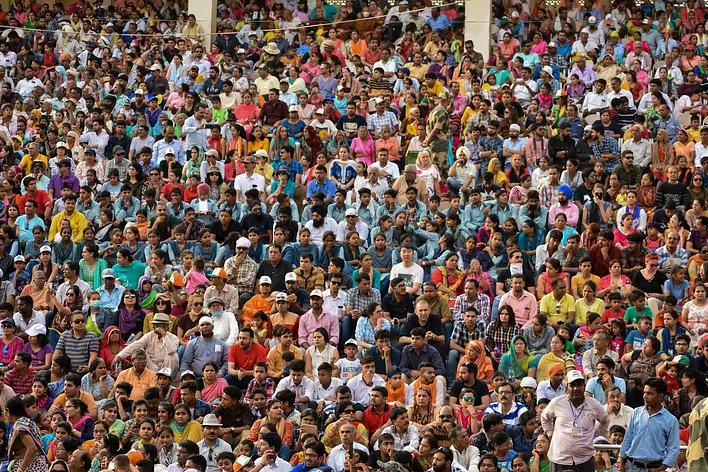
False urbanization is when cities grow faster than they can provide quality of life for their residents. This means that infrastructure cannot keep up with population growth. As a result — traffic jams, housing shortages, overcrowded schools and hospitals.

Why does false urbanization occur?

  1. Rapid population growth: People are moving to cities en masse in search of jobs.
  2. Lack of planning: Cities cannot keep up with developing infrastructure projects.
  3. Environmental issues: Air and water pollution becomes the norm.

How to avoid false urbanization?

  1. Investments in infrastructure: Building new roads, schools, and hospitals.
  2. Smart planning: Using technology to optimize the urban environment.
  3. Support for rural areas: Creating conditions for rural development.

Examples of successful and false urbanization

  • Successful urbanization: Singapore — an example of a city where technology and planning go hand in hand.
  • False urbanization: Some large cities in India suffer from overpopulation and resource shortages.

So, urbanization is not just about people moving to cities; it is a complex process with its challenges and opportunities. While it can open doors to new prospects, it is important to remember the balance between development and quality of life. I hope this article has helped you better understand this process and how to avoid its negative consequences.

In conclusion: should we be afraid of urbanization? Of course not! The key is to approach this issue wisely and not forget the importance of planning and infrastructure development. Then cities will become not only larger but also more comfortable to live in!
🔥 More posts

What is an antithesis: examples from literature
Sep 4, '25 03:00

What is an antithesis: examples from literature

Ви коли-небудь замислювалися, чому деякі фрази в літературі залишаються в пам’яті на довгі роки? Можливо, це завдяки майстерному використан…

What is cringe: simple words for everyone
Sep 14, '25 03:00

What is cringe: simple words for everyone

Чи траплялося вам колись таке відчуття, коли від побаченого хочеться сховатися під стіл або, навпаки, вибухнути сміхом? Це саме те, що нази…

Components of Happiness: Unveiling the Secrets of Harmony
Sep 14, '25 03:00

Components of Happiness: Unveiling the Secrets of Harmony

Щастя — це те, чого ми всі прагнемо, але часто не знаємо, з чого воно зіткане. Ми шукаємо його в різних місцях: у родині, кар’єрі, подорожа…

Sep 15, '25 03:00

IMHO: everything you need to know about meaning

Ви коли-небудь зустрічали в інтернеті загадкове слово “ІМХО”? Якщо так, то, напевно, задумувалися, що ж воно означає. Сьогодні ми розкриємо…

Sep 15, '25 03:00

What is a civil war: key concepts

Громадянська війна — це одне з тих явищ, про які всі чули, але не кожен розуміє його справжню суть. Це не просто конфлікт між різними група…

Sep 15, '25 03:00

What is scale: types and examples of application

Ви коли-небудь задумувалися, як архітектори перетворюють величезні будівлі на папері у зрозумілі креслення? Або як картографи вміщують цілі…

What is an algorithm in computer science: a simple explanation
Oct 6, '25 03:00

What is an algorithm in computer science: a simple explanation

Уявіть собі, що вам потрібно приготувати борщ. Ви маєте список інгредієнтів, знаєте послідовність дій і маєте кінцеву мету — смачний борщ н…

What is Makeba: uncovering the secrets of the song
Oct 6, '25 03:00

What is Makeba: uncovering the secrets of the song

Ви коли-небудь ловили себе на тому, що не можете викинути з голови якусь мелодію? Вона грає знову й знову, навіть коли навколо тиша. Якщо т…

What is personality: understanding the concept in your own words
Oct 6, '25 03:00

What is personality: understanding the concept in your own words

Що робить нас тими, ким ми є? Не лише риси характеру, не лише досвід чи освіта. Особистість — це унікальна мозаїка, складена з думок, почут…

What is an operating system: basics and functions
Oct 9, '25 03:00

What is an operating system: basics and functions

Операційна система (ОС) — це програмне забезпечення, яке виступає посередником між користувачем або програмами та апаратним забезпеченням к…

What are populations: structure and indicators
Oct 9, '25 03:00

What are populations: structure and indicators

Популяція — це сукупність особин одного виду, які проживають на певній території у певний час і здатні до взаємного розмноження. Концепція …

What is geographic latitude: a simple explanation
Oct 13, '25 03:00

What is geographic latitude: a simple explanation

Ви коли-небудь замислювались, як наші предки орієнтувалися в безкрайніх просторах Землі, не маючи GPS-навігаторів? Відповідь криється у про…