What are populations: structure and indicators

Post cover: What are populations: structure and indicators
Table of contentsClick link to navigate to the desired location
This content has been automatically translated from Ukrainian.

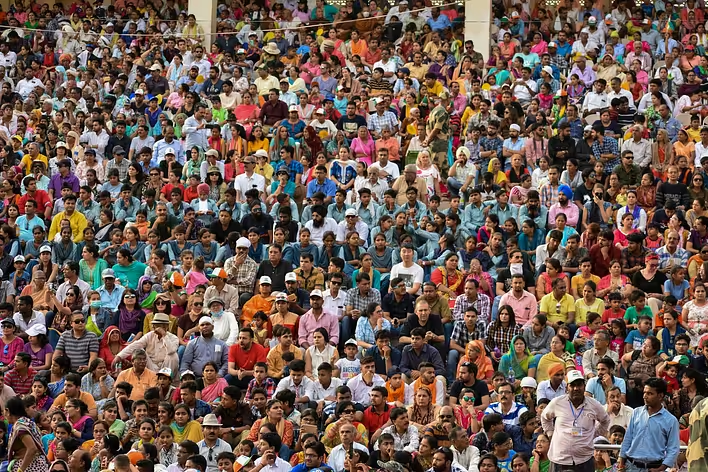
Population is a group of individuals of the same species living in a specific area at a specific time and capable of interbreeding. The concept of population is key in biology, ecology, and demography, as it allows for the analysis of species behavior, its numbers, development, and interaction with the environment.

Population Structure

A population can be viewed through several aspects of its structure:

  1. Age structure: the distribution of individuals by age — young, adults, and old. Age structure affects the reproductive rates and survival of the population.
  2. Sex structure: the ratio of males to females in the population. It determines the population's ability to reproduce.
  3. Spatial structure: the arrangement of individuals in space — uniform, clustered, or random. This structure defines social interactions, competition, and resource use.
  4. Genetic structure: the distribution of genetic traits among individuals. It affects the population's adaptability and its ability to survive in changing conditions.

Population Indicators

Various indicators are used to assess the state and dynamics of a population:

  • Population size: the total number of individuals in the population.
  • Density: the number of individuals per unit area or volume.
  • Population growth rates: the speed of increase or decrease in numbers over a certain period.
  • Birth and death rates: reflect natural reproduction and mortality of individuals.
  • Immigration and emigration: the movement of individuals between populations, affecting size and genetic diversity.

Importance of the Population Approach

The study of populations allows for:

  1. Predicting the development of species and their numbers in nature.
  2. Assessing the impact of ecological factors on species survival.
  3. Developing measures for the conservation of rare and endangered species.
  4. Planning the economic use of natural resources, such as fishing or forestry.

A population is the basic unit of biological and ecological analysis of a species. Its structure and indicators help to understand how living organisms interact with each other and with the environment, assess the state of ecosystems, and predict future changes. The study of populations is an important tool for science, nature conservation, and sustainable development.


🔥 More posts

Sep 15, '25 03:00

What is scale: types and examples of application

Ви коли-небудь задумувалися, як архітектори перетворюють величезні будівлі на папері у зрозумілі креслення? Або як картографи вміщують цілі…

Sep 15, '25 03:00

What is urbanization: simple words for everyone

Вас коли-небудь цікавило, чому міста ростуть, як гриби після дощу? Що ж, сьогодні ми поговоримо про урбанізацію — процес, який змінює наш с…

What is an algorithm in computer science: a simple explanation
Oct 6, '25 03:00

What is an algorithm in computer science: a simple explanation

Уявіть собі, що вам потрібно приготувати борщ. Ви маєте список інгредієнтів, знаєте послідовність дій і маєте кінцеву мету — смачний борщ н…

What is Makeba: uncovering the secrets of the song
Oct 6, '25 03:00

What is Makeba: uncovering the secrets of the song

Ви коли-небудь ловили себе на тому, що не можете викинути з голови якусь мелодію? Вона грає знову й знову, навіть коли навколо тиша. Якщо т…

What is personality: understanding the concept in your own words
Oct 6, '25 03:00

What is personality: understanding the concept in your own words

Що робить нас тими, ким ми є? Не лише риси характеру, не лише досвід чи освіта. Особистість — це унікальна мозаїка, складена з думок, почут…

What is an operating system: basics and functions
Oct 9, '25 03:00

What is an operating system: basics and functions

Операційна система (ОС) — це програмне забезпечення, яке виступає посередником між користувачем або програмами та апаратним забезпеченням к…

What is geographic latitude: a simple explanation
Oct 13, '25 03:00

What is geographic latitude: a simple explanation

Ви коли-небудь замислювались, як наші предки орієнтувалися в безкрайніх просторах Землі, не маючи GPS-навігаторів? Відповідь криється у про…

What is mycelium: secrets of the mushroom world
Oct 13, '25 03:00

What is mycelium: secrets of the mushroom world

Коли ми думаємо про гриби, зазвичай на думку приходять капелюшки на ніжках у лісі або на городі. Але справжнє життя грибів ховається під зе…

What are geographic coordinates: a simple explanation
Oct 15, '25 03:00

What are geographic coordinates: a simple explanation

Географічні координати — це система, яка дозволяє визначити положення точок на поверхні Землі за допомогою чисел. Вони складаються з двох о…

How does denomination change the value of money?
Nov 22, '25 02:00

How does denomination change the value of money?

Друзі, чи ви коли-небудь замислювалися, чому в різних країнах раптом вирішують змінити номінал банкнот? Це не просто примха урядів, а страт…

What is computer software: a complete guide
Nov 22, '25 02:00

What is computer software: a complete guide

Ви коли-небудь замислювалися, як ваш комп’ютер перетворюється з купи металу та пластику на потужний інструмент для роботи, навчання чи розв…

How to recognize signs of tolerance in society?
Dec 10, '25 02:00

How to recognize signs of tolerance in society?

Толерантність — це не просто модний тренд чи абстрактне поняття. Це важливий елемент суспільного життя, який допомагає людям жити в гармоні…