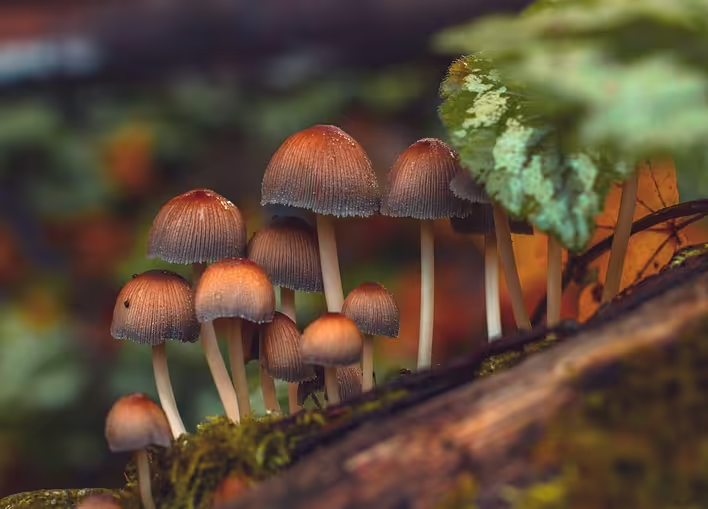
When we think of mushrooms, we usually picture caps on stems in the forest or in the garden. But the true life of mushrooms hides underground or inside trees in the form of thin, almost invisible threads — mycelium. It is what makes mushrooms so unique and important for nature and humanity.
What is mycelium?
Mycelium is the vegetative part of the fungus, consisting of branched thread-like structures called hyphae. It can spread over large areas, creating a true network underground, in wood, or on other substrates. Mycelium feeds on organic substances, breaking them down with the help of enzymes, and provides the fungus with nutrients for the growth of the fruiting body — that familiar cap.
The role of mycelium in nature
-
Decomposition of organic matter: The mycelium of the fungus breaks down complex organic substances such as wood, leaves, or plant remains, converting them into simpler elements that return to the soil. Without this process, ecosystems would quickly become cluttered with dead materials.
-
Symbiosis with plants: Many fungi form mycorrhiza — a mutually beneficial coexistence with plant roots. The fungus helps the plant obtain water and minerals, while receiving organic substances in return. Such symbioses are found in almost all forests around the world.
-
Bioremediation: Some species of fungi can clean soil and water from toxic substances by breaking down oil, pesticides, or heavy metals. Mycelium acts as a natural "sanitizer" of the ecosystem in this process.
Mycelium and humans
Humanity is increasingly using mycelium for scientific, medical, and industrial purposes:
- Medicine: Some species of fungi, such as reishi or shiitake, contain beneficial compounds released from mycelium that help the immune system.
- Food: Mycelium is the basis for growing edible mushrooms, including champignons, oyster mushrooms, and many others.
- Ecological innovations: Mycelium is used to create biodegradable packaging, building materials, and even clothing that completely decomposes after use.
Interesting facts about mycelium
- Some mycelial colonies can exist for thousands of years. For example, a giant mycelium of Armillaria has been found in Oregon (USA) that covers an area of over 8 km²!
- Mycelium can communicate with plants and other fungi through chemical signals, creating a kind of "network of life" in the soil.
- Scientists are exploring the possibility of using mycelium for producing electronics and sensors due to its ability to conduct electrical signals.
Mycelium is an invisible but extremely powerful component of the ecosystem. It not only nourishes mushrooms but also maintains balance in nature, helps plants grow, and even becomes a source of new technologies for humanity. The next time you see a mushroom in the forest, remember: beneath your feet lives a vast, invisible, and incredibly complex life.