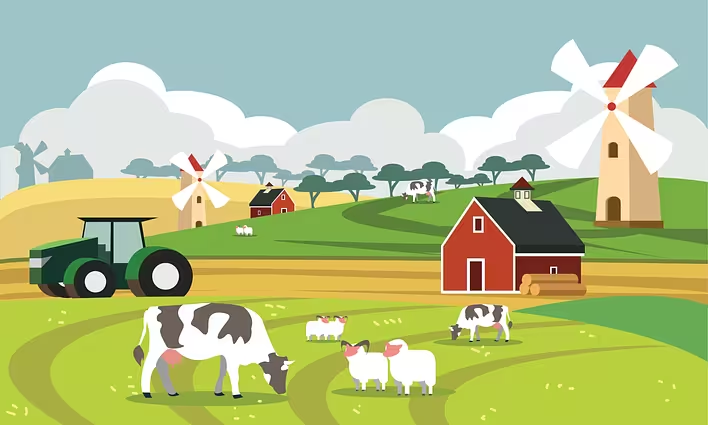
The Neolithic Revolution is one of the most important events in human history, fundamentally changing the way people lived. But what does the term "Neolithic Revolution" mean? It is the transition from foraging to farming economies, when people began to engage in agriculture and animal husbandry, instead of just gathering wild plants and hunting animals. This change occurred around 10,000 years ago and had a huge impact on the development of society.
What is the Neolithic Revolution?
The Neolithic Revolution is the period when humanity made a huge leap forward in its development. It marked the beginning of a new era when people started to live a settled life, creating permanent settlements. This process began in the Middle East and gradually spread across the world, including Ukraine.
Neolithic Revolution in Ukraine
In the territory of modern Ukraine, the Neolithic Revolution occurred approximately 7-8 thousand years ago. One of the most famous archaeological evidences of this period is the Trypillia culture, which existed in the territory of Ukraine. The Trypillians were among the first to actively engage in agriculture and animal husbandry, which significantly influenced their way of life.
How did the Neolithic Revolution affect the way of life of people?
The transition from foraging to farming had significant consequences for society:
- Settled life: People began to build permanent homes, which contributed to the development of settlements.
- Population growth: With a stable food source, the population began to grow.
- Technological development: New tools for farming and animal care appeared.
- Social changes: New forms of social relations and labor organization emerged.
Transition from foraging to farming economy
This transition was not only an economic but also a cultural phenomenon. People began to understand the importance of planning and long-term strategies for survival. It was a time when cooperation and collective labor became the foundation for community development.
Neolithic Revolution: causes and consequences
The causes of the Neolithic Revolution were diverse:
- Climate change: Warming climate created favorable conditions for agriculture.
- Population growth: The need for more food stimulated the search for new ways to obtain it.
- Innovations: Inventions of new technologies facilitated the transition to a settled way of life.
The consequences of this revolution were enormous:
- Urbanization: The first cities appeared.
- Economic development: Trade and labor specialization emerged.
- Cultural progress: Art and religion developed.
Practical tips
If you are interested in history or archaeology, it is worth visiting the sites of ancient settlements in Ukraine, such as Trypillia or Kam'yanske settlement. This will help you better understand how our ancestors lived and how their experiences influence us today.
Thus, the Neolithic Revolution is the transition from foraging to farming economies, which fundamentally changed people's lives and laid the foundations for modern society. This process became a true catalyst for progress and spurred the development of civilizations around the world. The changes that occurred then continue to affect our lives today.