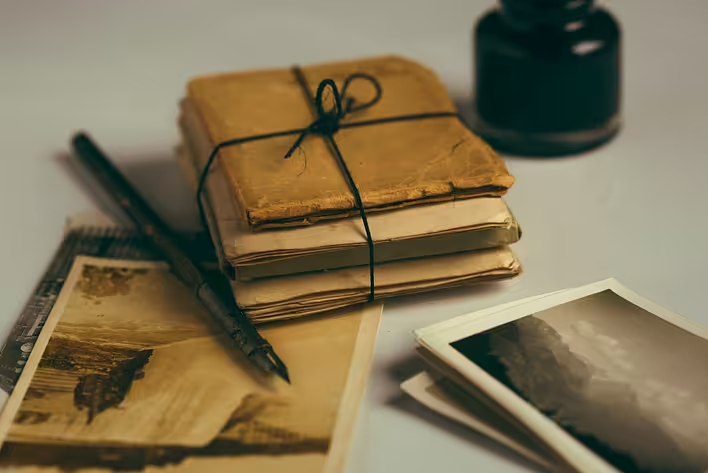
History is not just a set of dates and events that we learn in school. It is a living, dynamic process that shapes our present and future. Imagine that history is a huge mosaic, where each piece is part of the great canvas of humanity. Sometimes we do not notice this mosaic in our daily lives, but it is always there.
What is history?
History is the science of humanity's past, which studies events, phenomena, and processes that have occurred from ancient times to the present. It allows us to understand how society has developed, why certain changes occurred, and how they have impacted us. History is a kind of bridge between the past and the future.
Why is it important to remember different historical periods?
Remembering different historical periods is important for several reasons:
- Lessons of the past: History teaches us through examples. We can avoid mistakes that have already been made before.
- Formation of identity: Knowing our past helps us understand who we are today.
- Cultural heritage: History preserves cultural achievements that are the foundation of our identity.
What does history do?
History performs several important functions:
- Explains: It provides answers to the questions “why?” and “how?” regarding past events.
- Informs: It provides knowledge about important events and personalities.
- Educates: It develops critical thinking and the ability to analyze information.
What allows us to define history as a science?
History can be defined as a science due to:
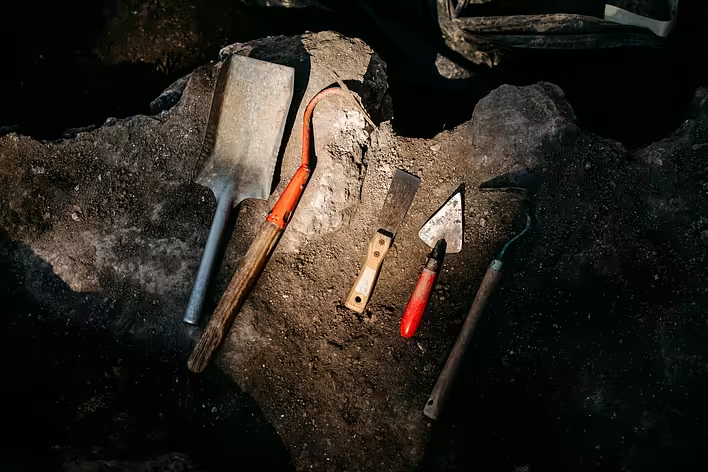
- Research methods: The use of archival documents, artifacts, and other sources to confirm facts.
- Data analysis: Historians systematize information to create an objective picture of events.
- Theoretical approaches: The application of various theories to explain historical processes.
A scientist who studies and describes history is...
A historian! This is a person who dives into the past to uncover its secrets. Historians work with documents, artifacts, and other sources of information to recreate the picture of a particular period.
Examples of the role of history in daily life
- Politics: Many political decisions are based on the lessons of history.
- Education: Studying history in schools fosters critical thinking in youth.
- Culture: Movies, books, and art often refer to historical themes.
Practical tips for those interested in history
- Start by reading books by famous historians.
- Visit museums and exhibitions.
- Listen to podcasts or watch documentaries on historical topics.