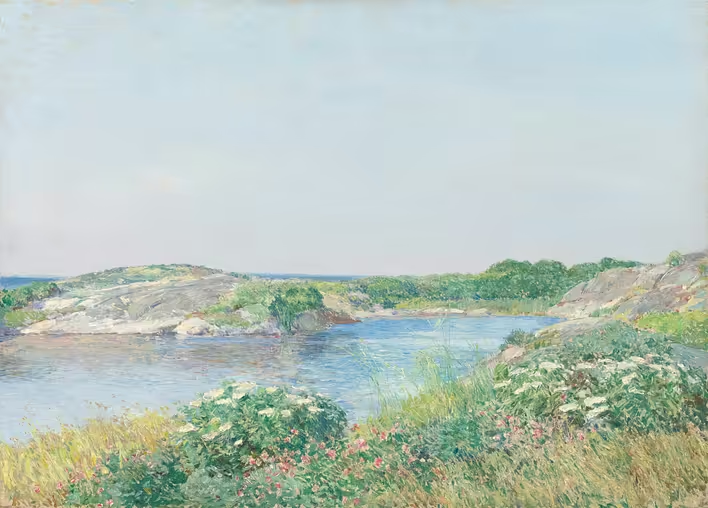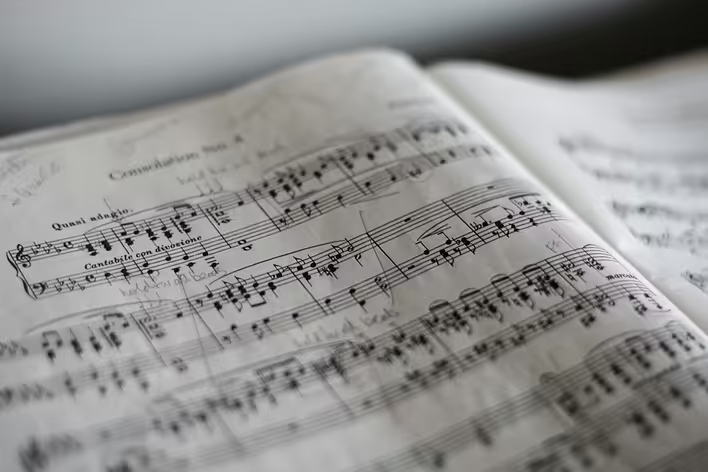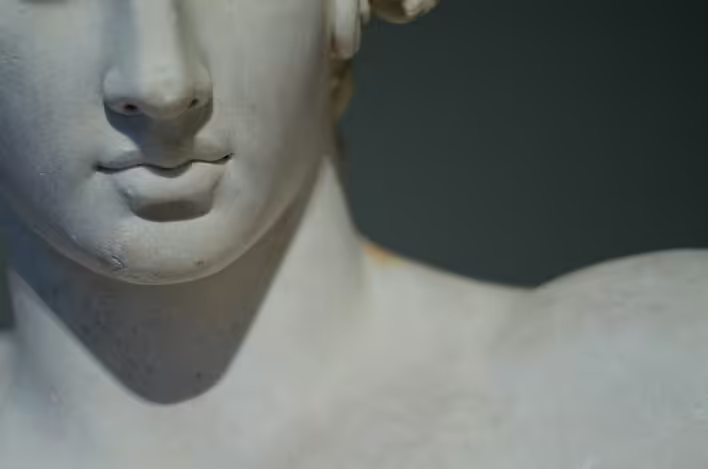
Classicism is an art style that always enchants with its harmony and simplicity. It emerged in the 17th century in Europe as a response to the baroque splendor. If you have ever looked at ancient paintings or architectural structures and felt that they breathe calmness and grandeur, you have likely seen classicism in action.
What is classicism?
The word “classicism” comes from the Latin word “classicus,” which means “exemplary.” Classicism arose as an art that aspired to the ideals of antiquity. It sought inspiration in ancient Greek and Roman culture, focusing on harmony, symmetry, and rationality. A striking feature of classicism is its pursuit of purity of form and clarity of content.
Main features of classicism
Classicism in art has its characteristic features that are easily recognizable:
- Simplicity and symmetry: All elements are arranged harmoniously, without unnecessary details.
- Rationality: Logic and order prevail over emotions.
- Use of ancient themes: Often refers to mythology or historical plots.
- Purity of lines: Nothing superfluous, only clear contours.
Classicism in literature
Classicism in literature also has its rules. Writers of this era aspired to clarity of language and logical plot development. The main goal is to teach good manners and moral values. Notable representatives of this style include Jean Racine and Molière. Their works impress with their restraint and depth.
What emerges in art in contrast to classicism?
Over time, classicism began to lose its popularity, giving way to romanticism. This new style emerged as a reaction to the cold rationality of classicism. Romanticism emphasized emotions, individuality, and spontaneity. It allowed artists and writers to express their feelings without restrictions.
Classicism in visual arts
The characteristic features of the classicism style in visual arts are no less expressive:
- Harmonious composition: Everything is subordinated to the overall idea.
- Ancient themes: Often depicts heroes from myths or history.
- Limited color palette: Uses calm, neutral tones.
An example can be the works of Jacques-Louis David – his paintings are noted for their clarity of forms and classical composition.
Rules of classicism
Classicists adhered to certain rules that can be compared to a recipe for delicious borscht – without them, nothing will turn out right:
- Adherence to the “three unities” (time, place, and action) in dramaturgy.
- Strict structure of the work.
- Avoidance of excessive embellishments and decor.
Classicism emerged as a desire for order in a world of chaos and continues to be a source of inspiration for many artists.
Classicism is not only an art style but also a philosophy of life that emphasizes the importance of reason, order, and beauty. Despite having given way to other styles, its influence is still felt in many areas of culture. So the next time you see a work of art with clear forms and harmonious composition, remember: before you is classicism in all its grandeur.