The lithosphere is a true mystery of nature, hiding incredible secrets of our planet beneath it. When we talk about the lithosphere, we mean the solid shell of the Earth, which consists of the upper part of the mantle and the Earth's crust. This is precisely where we live, build cities, and grow food. But do you know what lies beneath our feet? Let's figure out what the lithosphere is and what its chemical components are.
What is the lithosphere?
The lithosphere is not just a piece of rock. It is a whole world with various processes and phenomena. It consists of several layers: the Earth's crust and the upper mantle. These layers interact with each other, creating tectonic plates that move and shape the Earth's relief. Hence, the lithosphere is the foundation for all continents and oceans.
Chemical composition of the lithosphere
Now let's delve into the question: what is the chemical composition of the lithosphere? This question is not as simple as it seems at first glance. The lithosphere consists of various elements and minerals. Here are some of the main elements that make up most of the Earth's crust:
- Oxygen (O) — makes up about 46% of the mass of the lithosphere.
- Silicon (Si) — about 28%. Silicon, together with oxygen, forms silica (SiO₂), which is a major component of many minerals.
- Aluminum (Al) — approximately 8%.
- Iron (Fe) — about 5%.
- Calcium (Ca), sodium (Na), potassium (K), and magnesium (Mg) are also important components.
Interestingly, these elements do not exist in their pure form. They form various minerals and rocks, such as granite and basalt.
Why is the lithosphere important?
The lithosphere is not just a geological structure. It has immense significance for life on Earth:
- Support for biodiversity: The lithosphere is the habitat for most terrestrial organisms.
- Resources: Many valuable minerals, such as metals and minerals, are extracted from the lithosphere.
- Tectonic activity: The movement of tectonic plates can cause earthquakes and volcanic eruptions.
How is the lithosphere studied?
Scientists use various methods to study the lithosphere:
- Geophysical methods: Measuring the magnetic field and seismic activity helps understand the structure and composition of the lithosphere.
- Geochemical analysis: Rock samples are studied in laboratories to determine their chemical composition.
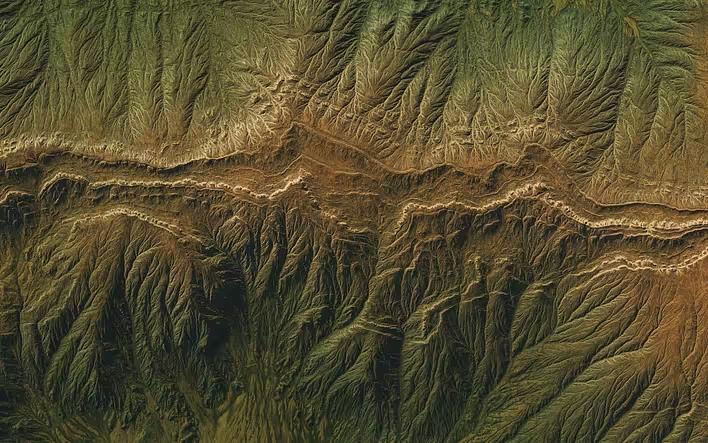
- Space observations: Satellites allow monitoring of changes in relief and the movement of tectonic plates.
Practical tips
If you are interested in geology or just want to learn more about our planet, here are some tips:
- Visit a local natural history museum or geological park.
- Find books or online courses about geology.
- Engage with professionals or join communities of geology enthusiasts.
The lithosphere is more than just the ground beneath our feet. It is a whole world with its own laws and phenomena. By studying it, we better understand our planet and our place in it. Now you know what the lithosphere is and what its main characteristics are. I hope this information has been useful and interesting for you!