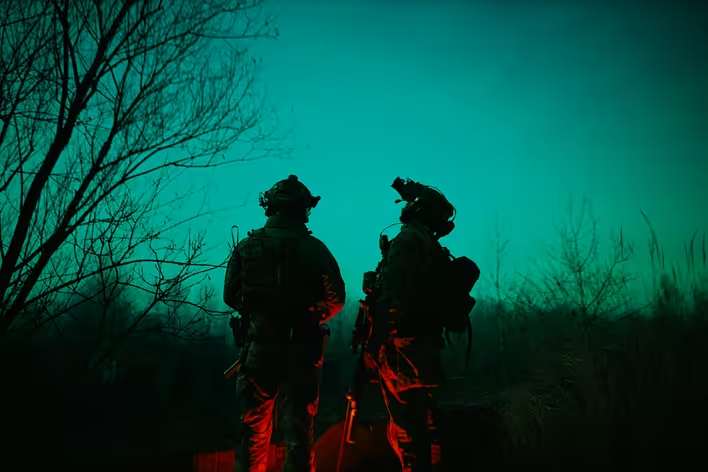
If you have ever heard the word “blitzkrieg,” it may have evoked associations with something fast and unstoppable. And this is no coincidence! Blitzkrieg is a strategy that requires speed, decisiveness, and surprise. But what does this mysterious term mean?
What does the term blitzkrieg mean?
The term “blitzkrieg” comes from the German language and literally translates to “lightning war.” It is a military strategy that involves a swift and powerful offensive aimed at inflicting maximum losses on the enemy in the shortest possible time. Imagine lightning striking suddenly and without warning – that is how blitzkrieg operates.
History and origin
This approach gained popularity during World War II thanks to the German military. They employed blitzkrieg for rapid attacks on Poland, France, and other countries in Europe. The main goal was to avoid protracted battles and quickly achieve victory.
Blitzkrieg: in simple terms
Blitzkrieg is like a sprint in the marathon of war. It requires maximum concentration of forces on a limited front to break through the enemy's defenses. The main elements of this strategy include:
- Speed: The use of motorized units for rapid advancement.
- Surprise: Unexpected attacks that disorient the enemy.
- Concentration of forces: Focusing a large number of military resources on one front.
Lightning war: how does it work?
Lightning war is not just a tactic, but a whole philosophy of conducting combat operations. Its success depends on several key factors:
- Information advantage: Gathering intelligence on the enemy to anticipate their actions.
- Coordination: Close cooperation between different branches of the military – infantry, aviation, and artillery.
- Technological advantage: Utilizing cutting-edge technologies and weapons to gain an edge on the battlefield.
Why does blitzkrieg remain relevant?
In a world where technologies are constantly evolving, blitzkrieg remains relevant due to its ability to adapt to new conditions. Modern military strategies still rely on the principles of speed and surprise.
How to apply the principles of blitzkrieg in life?
Although we do not wage war every day, the principles of blitzkrieg can also be useful in everyday life:
- Speed of decision-making: Do not postpone important decisions.
- Surprise in business: Introduce innovations that will surprise your competitors.
- Concentration of resources: Focus your efforts on one project to achieve maximum results.
Thus, blitzkrieg is not only a historical strategy but also a universal approach to solving complex problems. It teaches us to act quickly, decisively, and with focus. So the next time you need to tackle a challenge or make a breakthrough in any area of life, remember the principles of lightning war!